Author: Jose A. Belleza
AIT Library Call Number: AIT Thesis no. HS-81-05
Year: 1981
Academic Program: Human Settlement (HS)
Type: Thesis (M.Sc.) – Asian Institute of Technology, 1984
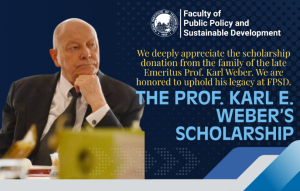
Examination Committee: Karl E. Weber (Chairperson); Hiran D. Dias (Co-Chairperson); Walter E. J. Tips, E. Desingu Setty, Jr. R. L. Gonzales (Examination Committee Members)
Abstract: This thesis is an attempt to explore more on the idea of access to and utilization of health and educational services in the rural areas of the Philippines. In this regard, the availability, awareness, status and degree of utilization by the people of these services were analyzed using some variables. The process, on a limited extent, was made on other services in the study area in order to compare and contrast the findings between Government-provided services and that of the private and traditional services. The study revealed that awareness of both public and private health services by the people was nigh. The number of users and the degree of their use, however, are varied. In general, there are few users of HC and BRS compared to PD and herbolario. Also, the extent of their utilization are lessees compared to other services such PD, pilot and herbolario. The degree of use of publics schools is quite high but still below our expectation. This was particularly observed in the case of secondary schools. Also, in the elementary level, despite their easy accessibility to almost all villages, the degree of their use was still not so high as would be expected. Chi-square test and quantification Theory I and It were the major statistical tests used in the analysis in this study. From among the variables used to test the use and satisfaction of services, distance and facility of travel were found to be the dominant factors particularly in using the HC, BRS and the secondary school. Income also played an important role with regard to the use of HC and BRS, as revealed by the chi-square and Quant It tests. In addition to the three variables mentioned above, the level of education exerted some influence in relation to the degree of use of HC and BRS as revealed by Quant 1 test. Income, level of education and facility of travel displayed their importance in relation to the degree of using public secondary School. The discrimination between users and non-users of social services was only possible in the case of BRS.
Scholarship Donor(s): The Canadian International Development Agency (CIDA)
Note: A thesis submitted in partial fulfillments oi the requirements for the degree of Master or Science
Advisory: Full-text is available at https://library.ait.ac.th/ (accessible to local ip address only)