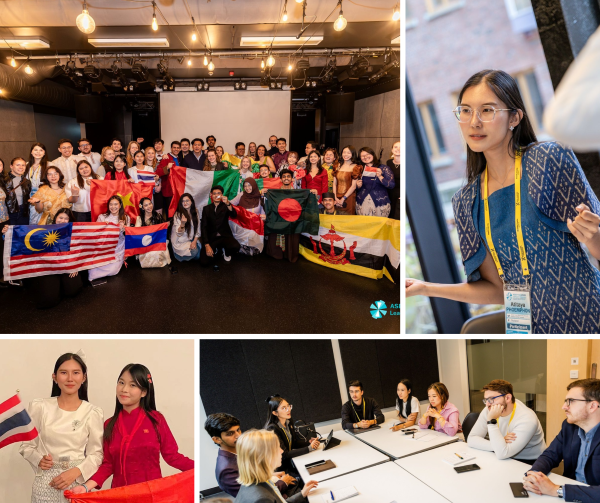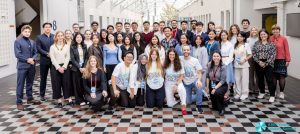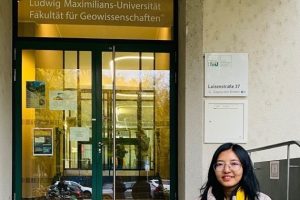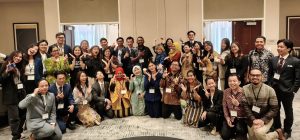
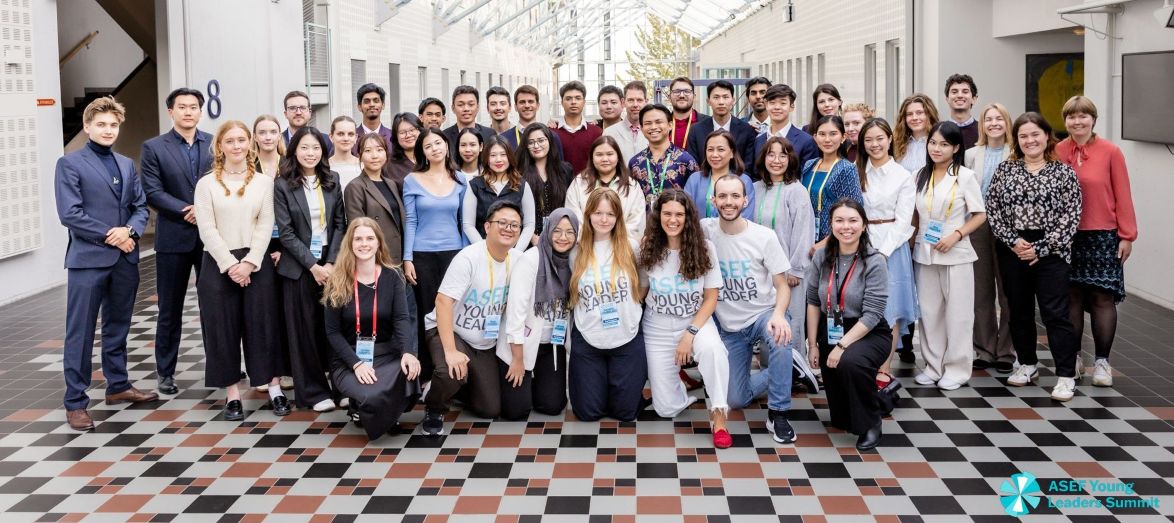
TROMSØ, NORWAY — From Thailand to the Arctic, Ms. Atitaya Phoemphon, a Master’s student in the Development Innovation and Sustainability (DIS) program at the Faculty of Public Policy and Sustainable Development (FPSD), Asian Institute of Technology (AIT), participated in the Asia-Europe Youth Leadership Training: Anticipatory Leadership in the Arctic, held from 23–29 August 2026 in Tromsø, Norway. As the only one participant from Thailand, she joined young leaders from Asia and Europe to explore how futures thinking, intercultural collaboration and youth participation can support more sustainable and inclusive decision-making.
Studying under the supervision of Dr. Duanghathai Buranajaroenkij, Ms. Atitaya brought perspectives from her work with youth environmental networks, including the Global Youth Biodiversity Network (GYBN) Thailand. Her experience in environmental communication, biodiversity and policy engagement provided a foundation for examining the connections between scientific knowledge, community perspectives and development decisions in the Arctic.
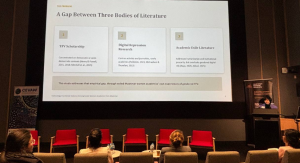
Through lectures by researchers from UiT The Arctic University of Norway, participants explored sustainable societies in the High North, Indigenous perspectives, climate change impacts on terrestrial and marine ecosystems, and responses to environmental change. A session on Arctic Ocean 2050 also introduced the role of research and collaboration in understanding the future of the Arctic Ocean. These discussions encouraged Ms. Atitaya to consider how knowledge across disciplines can inform long-term planning and public policy.
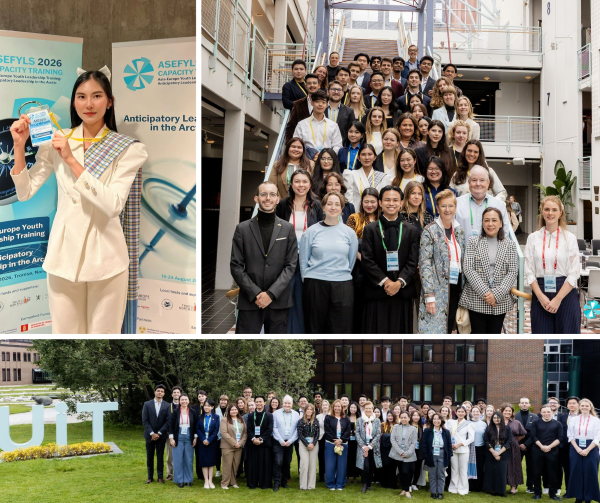
The programme combined these insights with practical workshops on horizon scanning, scenario development, cascading impacts, stress-testing and backcasting. These tools offered approaches to exploring alternative futures, questioning assumptions and connecting long-term goals with decisions in the present. For Ms. Atitaya, the learning complemented her DS studies by providing additional ways to examine uncertainty, stakeholder participation and the consequences of development choices.
Learning extended beyond the classroom through UNESCO Story Circles, dialogue with Tromsø city leaders and Sámi youth, and a screening of Let the River Flow. These experiences opened conversations about culture, identity, local knowledge and whose voices are included in decisions affecting communities. They also provided opportunities to practise listening and exchange perspectives with participants from diverse backgrounds.
Following the training, Ms. Atitaya is developing a multiplier activity to share selected foresight tools with young people in Thailand. The planned workshop will connect environmental challenges with future career pathways and encourage participants to explore how they can contribute to shaping their communities’ futures.
Her participation illustrates how international learning experiences can complement FPSD’s academic training, connecting development and sustainability studies with intercultural dialogue and practical approaches to youth engagement.