When Disaster Makes Research Matter: Indigenous Governance, Conservation, and Resilience in Langtang National Park
Faculty of Public Policy and Sustainable Development (FPSD)
On August 26, 2026, a catastrophic flash flood and debris avalanche struck Nepal’s Langtang region following a glacier collapse and ice-rock avalanche associated with Langtang Lirung. The resulting torrent of water, ice, rock, and debris swept downstream through the Lhende Khola, Bhote Koshi, and Trishuli river corridors, devastating communities and critical infrastructure in the region. Satellite analysis has documented the scale and extraordinary force of the event.
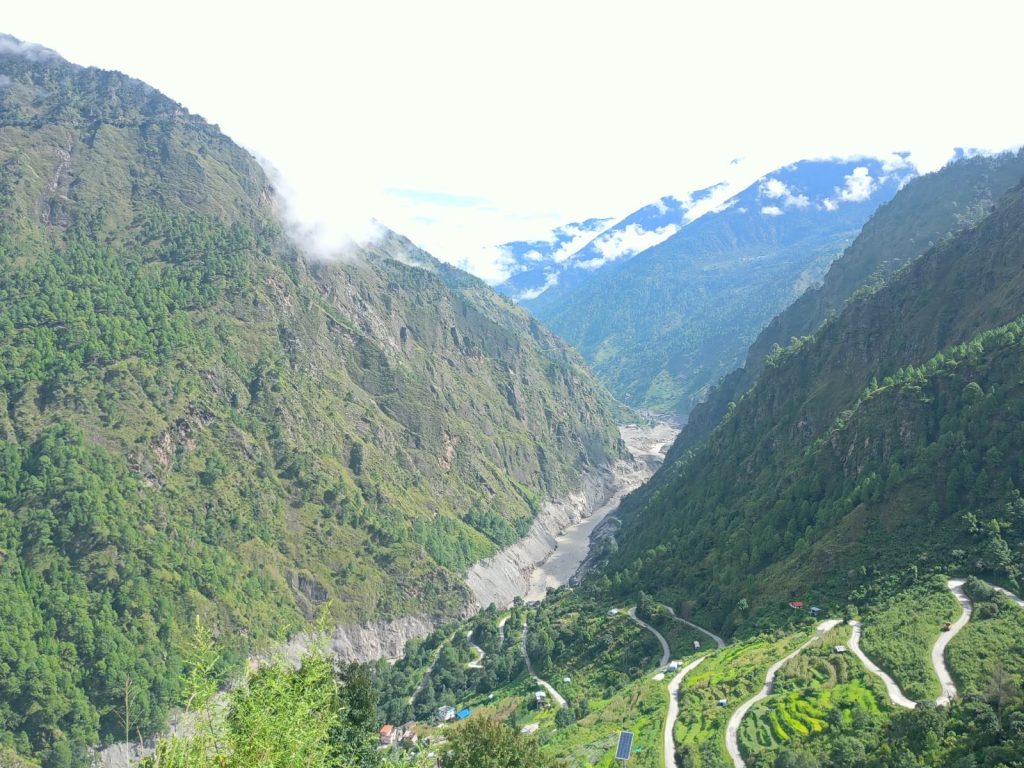
Langtang National Park during the recent floods, highlighting the dramatic mountain landscape and the resilience of communities living in this vulnerable terrain. Photo source: Dr. Suresh Tamang
The disaster gives renewed significance to the doctoral research of Dr. Sharmila Shyangtan (Tamang), a recent PhD graduate of the Faculty of Public Policy and Sustainable Development (FPSD), supervised by Associate Professor Dr. Thi Phuoc Lai Nguyen.
Only a year earlier, Shyangtan was conducting fieldwork in and around Langtang National Park (LNP), examining how conservation governance shapes the lives and livelihoods of Indigenous and Local Communities. Her research explored the livelihood sustainability of Tamang, Hyolmo, and other local communities living across four Buffer Zones in the districts of Rasuwa, Nuwakot, and Sindhupalchowk.
Her doctoral research, involving more than 400 households as well as local authorities, examined not only whether conservation policies achieve their environmental objectives, but also how those policies are experienced in everyday life. It asked a fundamental question: How does conservation governance affect the people who live with, depend upon, and protect these forests and landscapes?
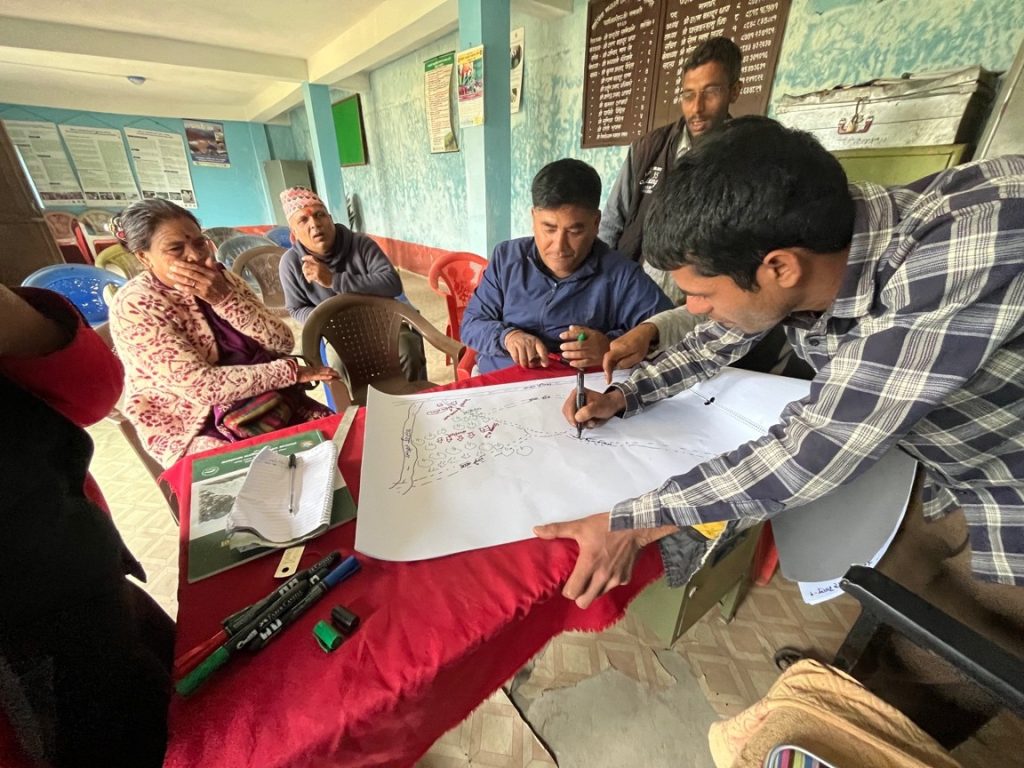
Community members and local officials work through a participatory resource map during Shyangtan’s fieldwork in the Buffer Zone.
The research highlights that conservation is essential, but conservation alone is not enough. Effective and sustainable conservation requires governance institutions that are inclusive, just, and responsive to local realities. In particular, Indigenous and traditional governance systems can play an important role in ensuring that local communities are not simply treated as beneficiaries – or subjects – of conservation policy, but as active custodians and owners of knowledge about the environments they have protected for generations.
The timing of this research has taken on new weight. On 26 August 2026, a glacier collapse on Langtang Lirung triggered a catastrophic flash flood down the Trishuli corridor, striking communities and infrastructure across the Langtang-Trishuli region- including Rasuwa and Nuwakot. As of early September 2026, Nepal’s disaster authorities report at least 1,342 [1] deaths and 4,886 [2] people missing, among the deadliest disasters in Nepal in decades.
The flood destroyed the Rasuwagadhi border crossing and leveled the trading settlement of Syabrubesi, where Shyangtan conducted qualitative fieldwork, along with the nearby hub of Timure Bazaar. The 111 MW Rasuwagadhi hydropower project was severely damaged and dozens of bridges and stretches of roadway across the affected districts were destroyed. Nepal’s National Disaster Risk Reduction and Management Authority has put preliminary property and infrastructure losses at roughly US$2.56 billion [3]; the Finance Ministry’s separate, earlier estimate for full reconstruction runs between US$4 billion and US$5 billion [4]. Both figures are described by their sources as preliminary, with detailed assessments still underway.
Her household survey was carried out in the nearby settlement of Thulo Syafru, within the same Buffer Zone unit in Rasuwa’s Gosaikunda Rural Municipality — an area that also encompasses the sacred Gosaikunda Lake and major high-altitude trekking routes central to local tourism livelihoods. Thulo Syafru was not directly struck by the flood, but the two communities are bound by Tamang kinship, and many Thulo Syafru residents work and have family in Syabrubesi so even when homes stood, the loss was felt as the loss of one’s own people.
The disaster’s scale has renewed scrutiny of Nepal’s early-warning and emergency-response systems – a different governance domain from the one Shyangtan studied, but one that echoes her dissertation’s central finding: that how institutions function, not just how they’re formally structured, shapes outcomes for the communities they’re meant to serve. Her work on Buffer Zone governance offers a research-based lens for understanding why some communities are better equipped than others to anticipate and recover from such shocks.
A governance system with gaps between promise and practice
Since Nepal introduced the Buffer Zone (BZ) model in the early 2000s to bring local communities into conservation decision-making, benefit sharing, community forestry have become part of the park’s official language. Shyangtan’s findings show a more complicated reality underneath that language.
The research identifies three intersecting forms of injustice experienced by Tamang, Hyolmo and local communities’ households. Communities carry a disproportionate share of conservation’s costs — restricted access to forest resources, crop and livestock losses from wildlife, and compensation systems that are difficult to access – while ecological and economic benefits of conservation flow largely to state agencies, conservation organizations, and tourism operators.
Participation in Buffer Zone institutions, meanwhile, often looks more substantial on paper than it feels in practice: households report attending meetings and sitting on committees without meaningfully shaping outcomes. And Indigenous ecological knowledge and stewardship — the belief that forests are a communal trust to be protected for future generations — is rarely recognized as equal to formal park authority.
One of the study’s clearest findings is statistical: how governance decisions are made and communicated to communities matters more to household livelihood outcomes than who formally holds authority. In plain terms, the process of governance whether it is transparent, responsive, and inclusive has a stronger relationship with community wellbeing than the formal structure of governance alone.
Conservation authorities have their own rationale for these restrictions: forest and wildlife protections are intended to preserve the ecological base that sustains not only the park’s biodiversity but the tourism economy many of the same households increasingly rely on. Shyangtan’s research does not dispute that rationale — it argues that the way those protections are designed and enforced, not their existence, is what determines whether communities experience them as fair.
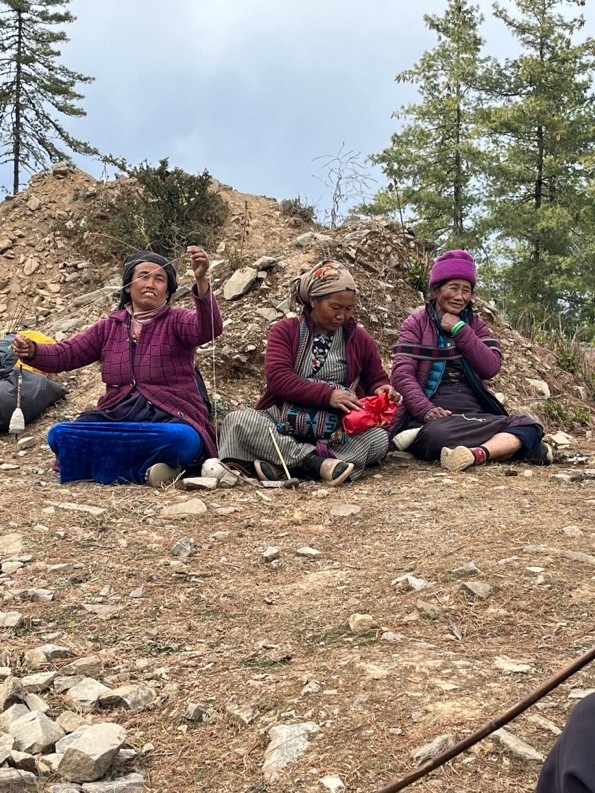
Tamang women in a Buffer Zone settlement. Indigenous ecological knowledge, Shyangtan’s research finds, is rarely recognized as equal to formal park authority.
What this looks like in daily life
Across the four Buffer Zones, households describe a consistent set of pressures. Farmers speak of crop losses to monkeys and wild boar, with compensation processes that are inconsistent or, for some types of damage, unavailable altogether. Access to medicinal plants and forest products, once central to household income and health, has become tightly restricted, while permits for other forest use are sometimes granted unevenly across villages.
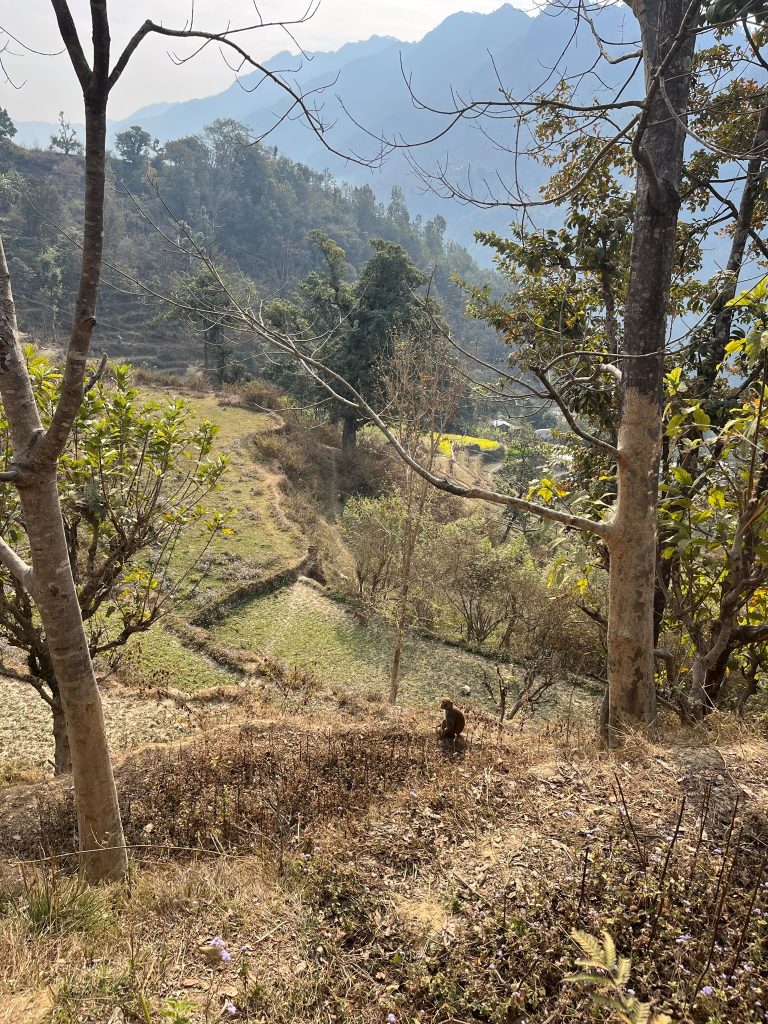
Wildlife encroachment on farmland is a daily reality for Buffer Zone households — one of the recurring costs of conservation that Shyangtan’s research documents.
In the more remote Buffer Zones, chronic water scarcity and shifting snowfall patterns arriving later or not at all around Lhochhar (Lho-Year, Chhar -New), the Tamang New Year, when snowfall was once more predictable are reshaping agricultural cycles that communities have relied on for generations. With limited local livelihood opportunities, many households have increasingly come to depend on remittances from family members working abroad, leaving some villages increasingly composed of older residents and children.
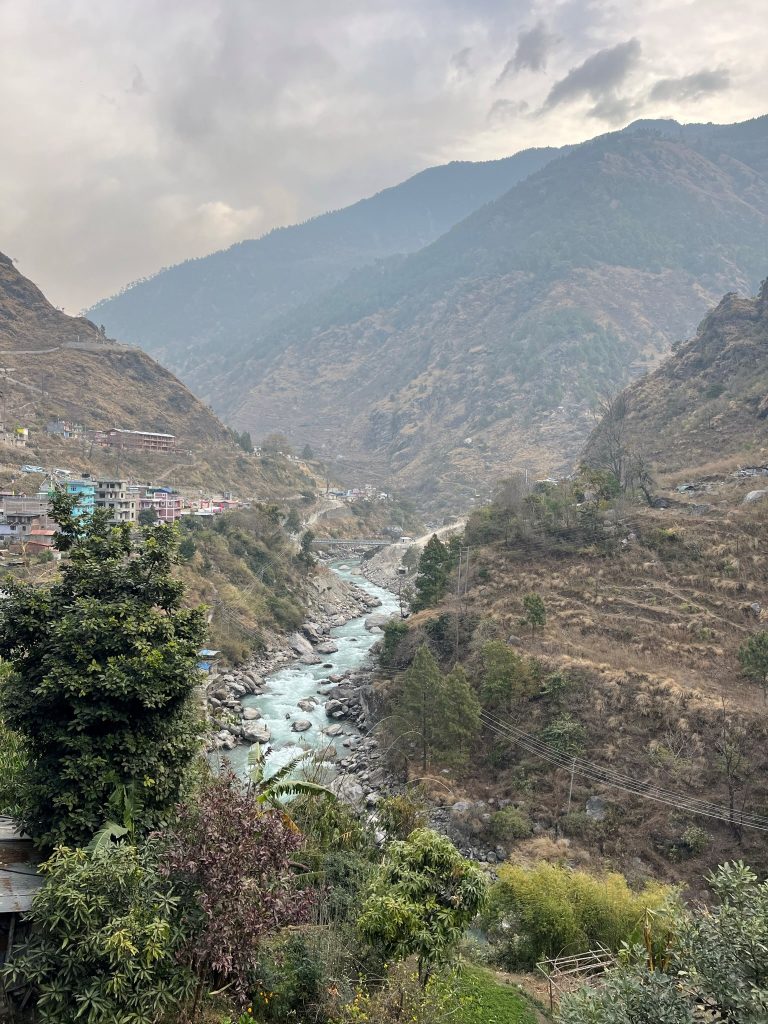
Syabrubesi, a Buffer Zone settlement along the Bhotekoshi river, photographed before the August 2026 flood that destroyed much of the town.
What emerges is not a single dramatic failure, but a pattern: institutions designed to share power with communities have, in practice, changed procedures more than they have changed who holds meaningful decision-making authority.
Why this research matters now
The research findings speak to several global development priorities: reducing poverty and inequality in mountain communities (SDGs 1 and 10), advancing more effective and equitable conservation of terrestrial ecosystems (SDG 15), strengthening inclusive and accountable institutions (SDG 16), and building climate resilience in a landscape increasingly exposed to environmental and hydrological hazards (SDG 13).
The research recommendations point toward practical reforms. These include embedding Free, Prior and Informed Consent (FPIC) principles into Buffer Zone decision-making; using household vulnerability assessments to direct support toward families most exposed to environmental and livelihood risks, rather than distributing resources uniformly; and strengthening the institutional channels through which community knowledge, concerns, and priorities reach conservation authorities.
Sharmila and her advisor Assoc. Prof. Dr. Thi Phuoc Lai have also disseminated their research findings through several international conferences and academic publications, including an article published in the journal Local Development & Society. The article, “Governance and Institutional Impacts on Indigenous and local livelihoods in Langtang National Park, Nepal”[1] was published online in June 2026. Two additional journals articles: “Evolution of Conservation Policies and Its Impacts on Indigenous Community’s Livelihood Through the Advocacy Coalition Framework in Langtang National Park, Nepal” and “Governance Process as the Structural Driver of Livelihood Sustainability: Evidence from Buffer Zone Transformation in Langtang National Park, Nepal” emerging are currently under review.
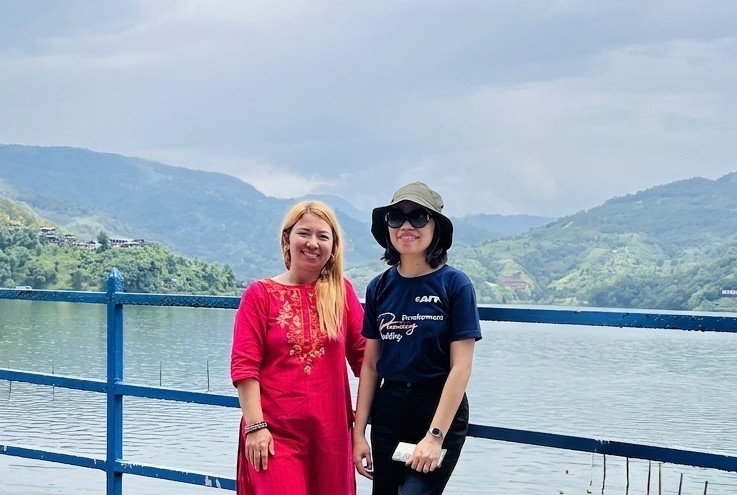
Dr. Sharmila Shyangtan with Assoc. Prof Dr. Thi Phuoc Lai during her visit to Nepal — a moment where academic inquiry met the communities and landscapes it studies.
Sharmila is also preparing to present related work at the International Indigenous Research Conference (IIRC) in Auckland, 17-20 November [1] later this year. The research was supported by the Jane Alexandra Storm Foundation and AIT was made possible through the participation, knowledge, and trust of Tamang, Hyolmo and local community members across Langtang National Park’s Buffer Zone.
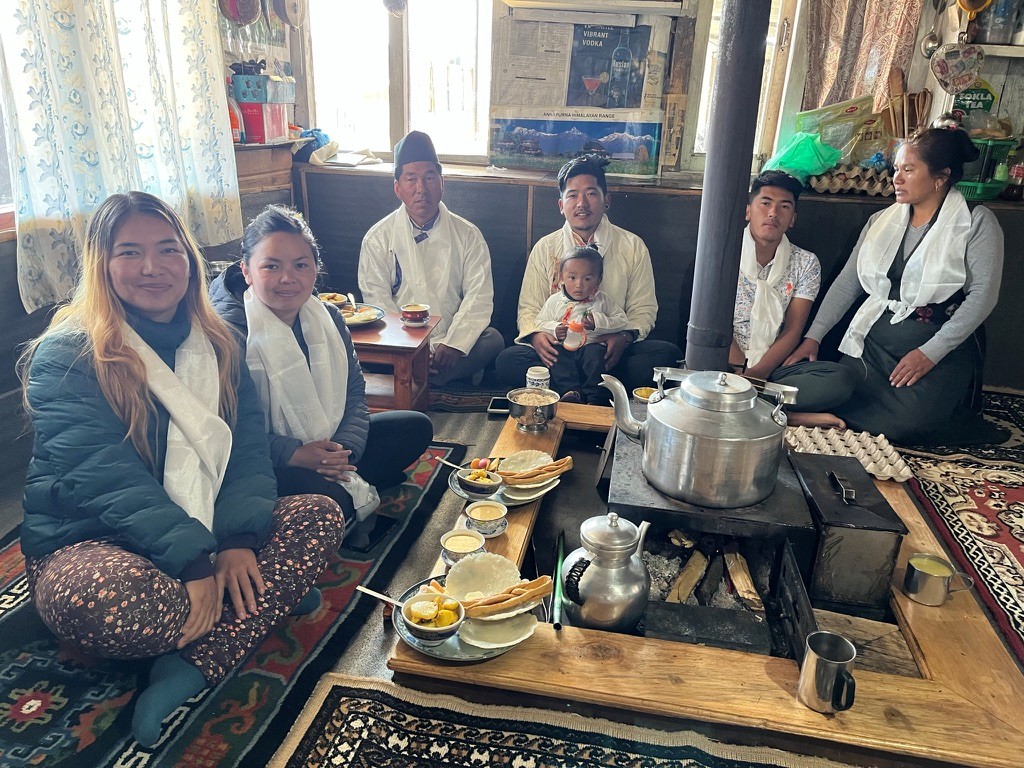
A Hyolmo family shares tea around the hearth in a Buffer Zone settlement – the everyday hospitality and trust that made this research possible.
Together, these outputs extend the research beyond the dissertation itself, contributing evidence and perspectives on Indigenous and local livelihoods, conservation governance, institutional resilience, and equitable development in the Himalayan region.
__________________________
[1] https://edition.cnn.com/2026/09/05/world/live-news/nepal-china-flood
[2] ibid
[3] https://ndrrma.gov.np/np
[4] https://www.reuters.com/world/china/nepal-needs-least-4-billion-rebuilding-finance-minister-says-2026-08-29/
[5] https://www.tandfonline.com/doi/abs/10.1080/26883597.2026.2685562
[6] https://www.iirc.ac.nz/
Disclaimer & Source Attribution
This article was originally created by Dr. Sharmila Shyangtan and Assoc. prof. Dr. Thi Phuoc Lai Nguyen and published by the Asian Institute of Technology on 14 September 2026. It is republished on https://fpsd.ait.ac.th with permission. All rights, including copyright and intellectual property, remain with the original author and publisher. You can view the original publication at https://ait.ac.th/2026/09/when-disaster-makes-research-matter-indigenous-governance-conservation-and-resilience-in-langtang-national-park/.