SINGAPORE — “What does it mean to call Southeast Asia home when the sea is slowly changing the places we belong?”
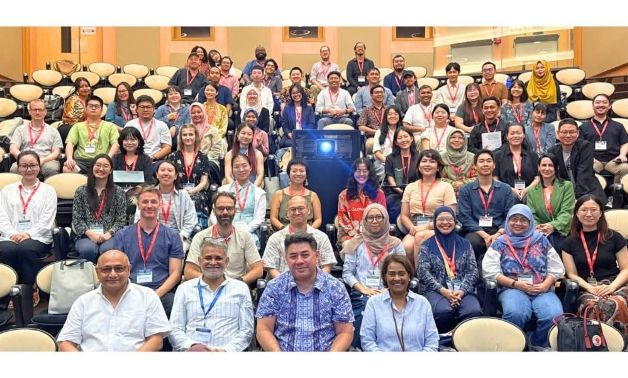
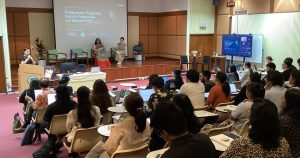
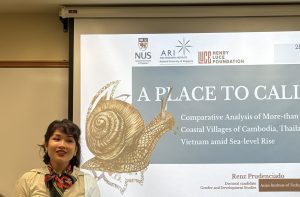
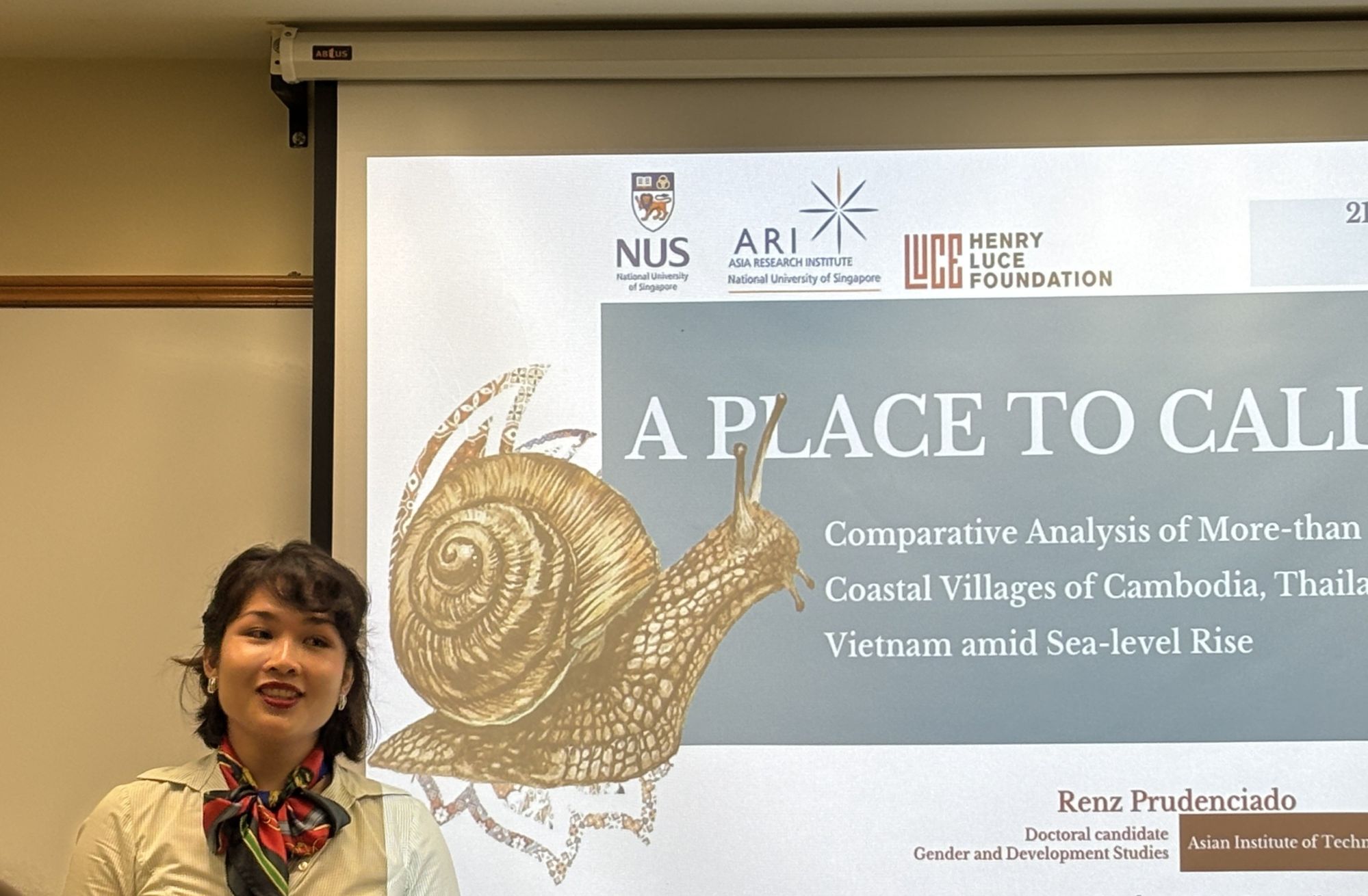
This poignant question took center stage at the 21st Singapore Graduate Forum on Southeast Asian Studies, hosted by the Asia Research Institute at the National University of Singapore (NUS). Ms. Renz Prudenciado, a doctoral student in the Gender and Development Studies (GDS) program of the Faculty of Public Policy and Sustainable Development (FPSD), presented a groundbreaking study challenging how academia views climate displacement.
Rather than relying solely on numbers and statistics, Prudenciado’s study aims to fundamentally change how the academic community views climate displacement. Focusing on coastal communities in Cambodia, Thailand, and Vietnam, her research explores how these populations navigate settlement choices in the face of rising sea levels.
Crucially, the study highlights that their decisions are deeply tied to protecting relationships—a concept Prudenciado defines as “more-than-human solidarity.” This represents the meaningful, protective connection between people, their livelihoods, and the shifting ecosystems—like mangroves and rivers—that shape their daily lives.
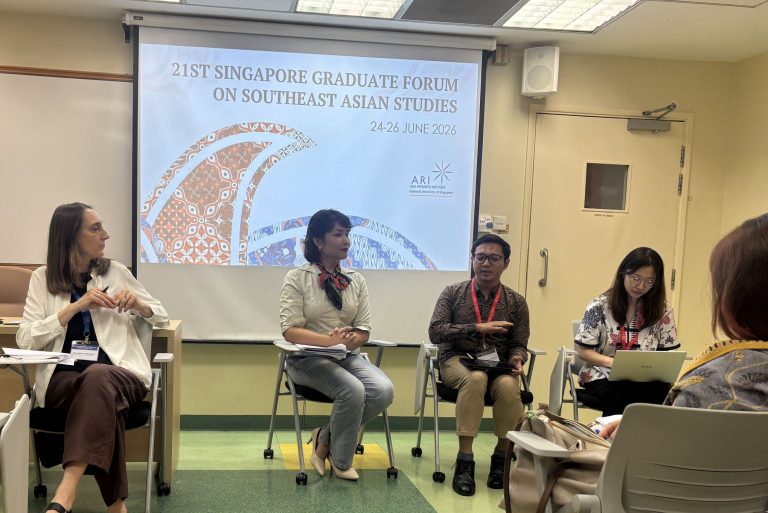
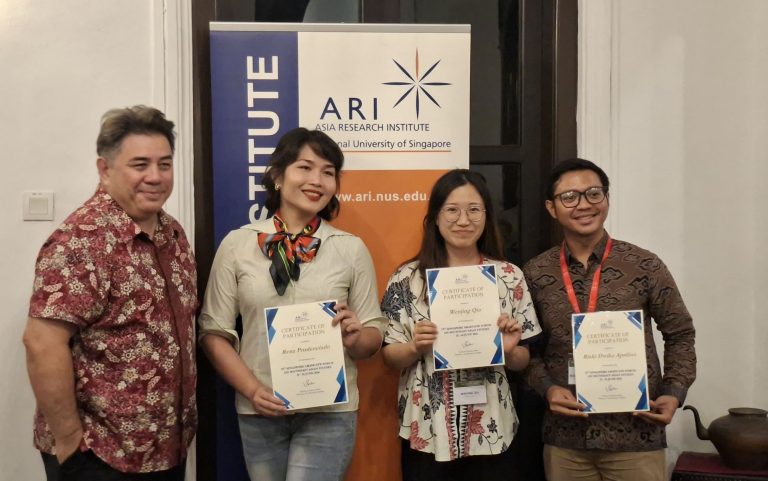
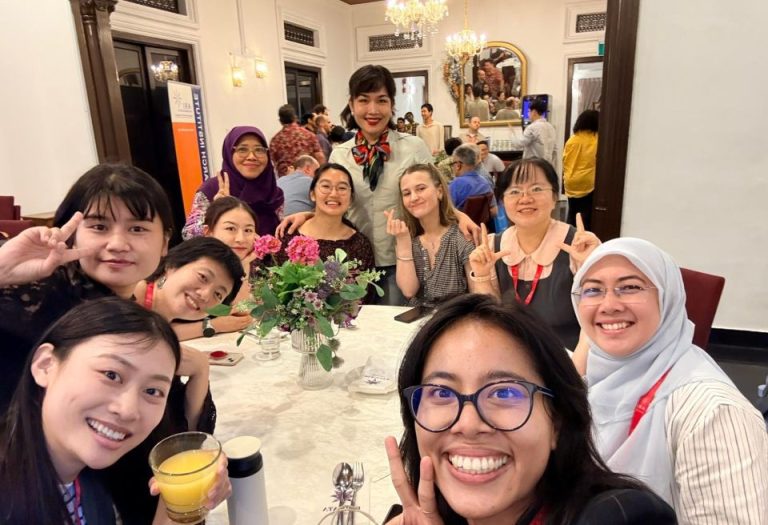
Prudenciado’s unique background—a Bachelor’s degree in Biology specializing in environmental science and entomology—allowed her to ground a traditional social science research in a refreshing biological perspective. This interdisciplinary approach earned praise from panel discussant Prof. Elisabeth Peyroux, who commended the work as: “A lesson in social values and environmental care.” – a delightful validation that the most meaningful solutions often emerge where different fields of study intersect.
For the researcher, the project unexpectedly mirrored her own upbringing on a small island. “Like many coastal communities, we lived through storms,” Prudenciado shared. “But what I remember most was the people helping one another, and the understanding that our lives were inseparable from the land and sea that sustained us.”
As the AIT-FPSD celebrates this academic achievement, the study leaves the global climate conversation with a vital paradigm shift.
“Is sea-level rise really the antagonist?” Prudenciado challenges. “Or is the deeper challenge how we choose to live with environmental change while caring for the relationships that make a place feel like home?”