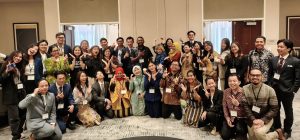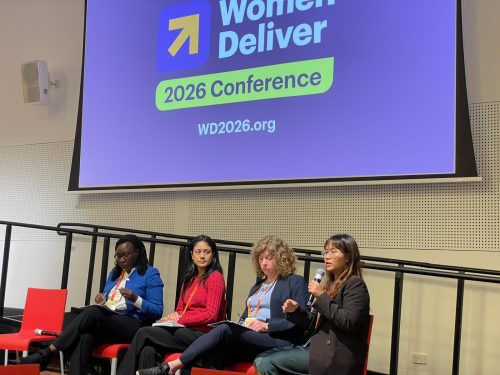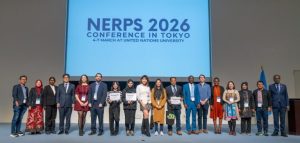
AUSTRALIA — From July to August, Ms. Aye Aye Aung, a master’s student in the Faculty of Public Policy and Sustainable Development (FPSD)’s Gender and Development Studies (GDS) program had the opportunity to join a one-month research fellowship in Australia as a Myanmar–Australia Visiting Research Fellow.
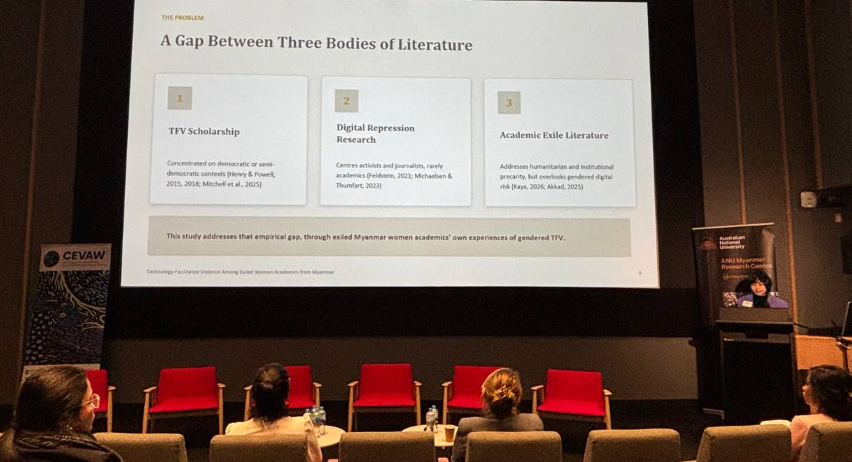
Ms. Aye Aye Aung’s research journey started in the August 2025 semester at the Asian Institute of Technology (AIT), where she took courses of “Diversity, Equity and Social Justice in Digital Culture” and “Gender, Science and Technology.” These classes ignited her interest in how technology influences gender dynamics and shapes the way people interact in today’s digital world. Inspired by these ideas, she focused her master’s research on how gender and technology-facilitated violence intersect.
Building on this research interest, she was selected from hundreds of applicants to participate in the 2026 Myanmar–Australia Visiting Research Fellowship Program, jointly hosted by the Australian National University (ANU) in Canberra and the University of Melbourne. The program is supported by the Australian Department of Foreign Affairs and Trade (DFAT) and the International Development Research Centre, Canada. The fellowship allowed her to deepen her research while engaging with leading academics, policymakers, and development practitioners in Australia
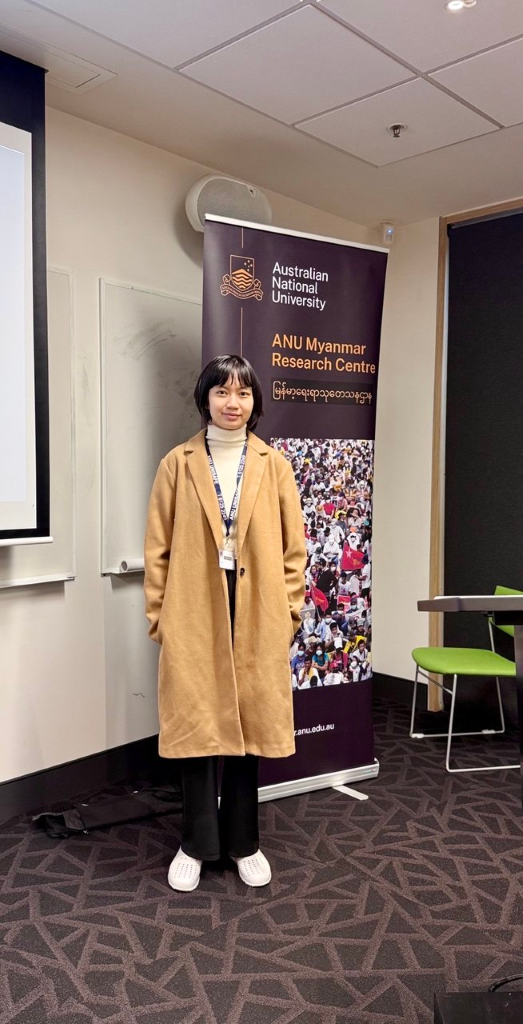
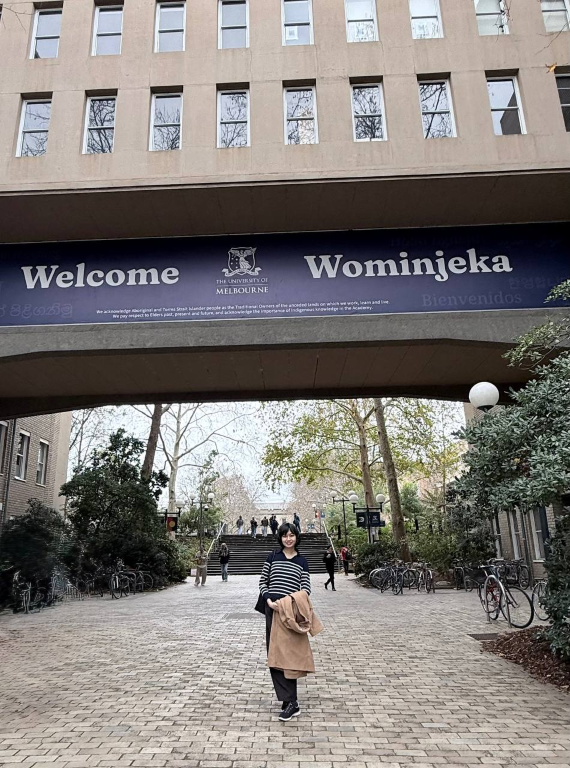
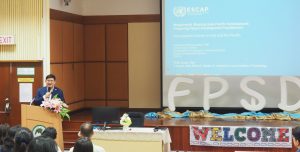
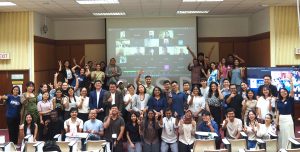
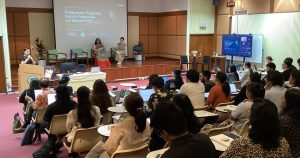
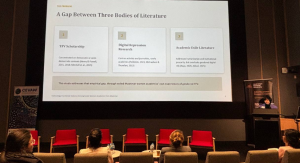
During the fellowship, Ms. Aye Aye Aung presented her master’s research proposal at the Myanmar Update Conference at ANU, where she also met with the DFAT team to share recommendations on how to strengthen financial and economic support for women-headed households in Myanmar as part of the Australia–Myanmar Development Partnership (2024–2029). At the University of Melbourne’s Myanmar Research Network, she discussed her research with scholars, received helpful feedback, and built valuable connections with Australia Awards Scholarship (AAS) students and others working on Myanmar.
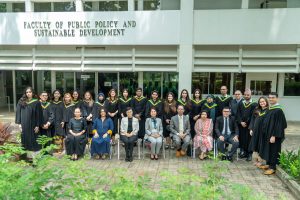
Ms. Aye Aye Aung’s studies at AIT laid the foundation for this experience. The GDS program taught her to use gender analysis not just in theory, but as a practical tool to understand structural inequality and drive social transformation. The knowledge and guidance she received at AIT prepared her to engage confidently in international academic and policy discussions. As she continues her studies at AIT, she is now more equipped with the knowledge, networks, and inspiration gained from this fellowship. For this, she expresses her deep gratitude to the FPSD, the Gender and Development Studies Program, the Australian Department of Foreign Affairs and Trade, the ANU Myanmar Research Centre, and the University of Melbourne for their generous support and for making this incredible opportunity possible