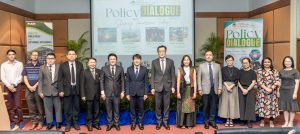
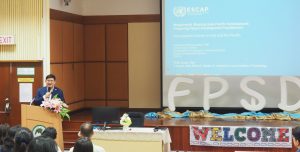
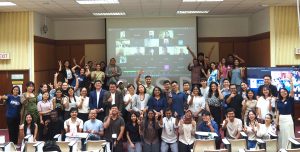
Our faculty’s active research portfolio highlights a dynamic commitment to tackling the most critical socio-environmental challenges across the Asia-Pacific. By seamlessly bridging climate change resilience, sustainable agriculture, and technological innovation, these initiatives drive real-world solutions for regional sustainability. At the heart is a profound dedication to gender equity, feminist scholarship, and inclusive leadership, ensuring marginalized communities actively shape future policy. Together, these transdisciplinary projects are not just generating academic knowledge, but actively forging a more just, climate-smart, and secure tomorrow. Scroll down to learn more.
Women Voice Leadership Hub for Southeast Asia and Eastern Europe (WVL Hub SEA-EE)
Lead Faculty: Prof. Paula Banerjee
Donor: International Development Research Centre (IDRC – Canada)
The overall objective is to strengthen women’s rights organisations (WROs), LGBTQI+ groups and feminist movements across Southeast Asia and Eastern Europe through regional peerto-peer learning, capacity strengthening, and collective advocacy, enabling them to more effectively advance gender equality.
The specific objectives are as follows:
Facilitate regional learning and peer-to-peer exchanges among RWVL partners and their communities to enhance their strategies and collective impact.
Support RWVL partners to generate, share, and position knowledge to document impact and key lessons learned, and to support evidence based advocacy that advances policy, legislative, and social norm change for gender equality.
Strengthen feminist monitoring, evaluation, accountability and learning (MEAL) capacities of RWVL partners to foster organizational sustainability and generate new insights on strategies and practical approaches to advance gender equality.
Support the visibility and policy influence of feminist actors through joint efforts in supporting partners to contribute feminist evidence and narratives in strategic communications, convening events, and collaborative advocacy efforts.
Regenerative Cassava and Corn Agriculture Project GHG Emission Reduction in Thailand (CAPE project)
Lead Faculty: Prof. Kyoko Kusakabe, Dr. Thi Phuoc Lai Nguyen, and Dr. Duanghathai Buranajaroenkij Donor: Deutsche Gesellschaft fuer Internationale Zusammenarbeit (GIZ) GmbH
The CAPE project focuses on reducing greenhouse gas emissions from cassava and corn farming in Thailand, two key crops supporting millions of smallholder farmers who are highly vulnerable to climate change. These crops contribute significantly to emissions through practices like burning, intensive tillage, and fertilizer overuse.
The project promotes regenerative agriculture to improve soil health, biodiversity, and water retention while lowering emissions. It includes farmer training, carbon footprint assessments, and continuous monitoring. Aligned with Nestlé’s climate strategy, CAPE implements both on-farm and landscape-level interventions to enhance resilience, reduce environmental impact, and support sustainable livelihoods in agricultural communities.
Harnessing Resilience of Agricultural Heritage Systems to Climate Change in the Highlands of Southeast Asia (AHS Southeast Asia)
Lead Faculty: Dr. Thi Phuoc Lai Nguyen
Donor: Asia-Pacific Network for Global Change Research (APN)
This project will identify different types of AHS that represent both tangible and intangible agroecological values, in line with FAO’s GIAHS criteria. It will assess the social-ecological resilience of AHS farmers’ livelihood resilience to climate change. Case studies will create community-driven knowledge base by integrating indigenous knowledge and establish a regional network of AHS resilience studies in the SEA highlands. The project will adopt a transdisciplinary approach, linking science and policy through collaboration with research institutions, civil society, and private sector.
The specific objectives are as follows:
To identify and describe AHS in the SEA highlands, its tangible and intangible values;
To assess the social-ecological change and local farmers’ livelihood resilience to climate change;
To create a community-driven knowledge base by considering the traditional and indigenous knowledge to enhance AHS resilience capacity; and
To generate implications for prioritizing AHS conservation in sustainable agricultural policies and practices.
Research and Knowledge Generation on Women, Peace and Security (WPS) in Bangladesh (RKG on WPS, Bangladesh)
Lead Faculty: Dr. Julaikha Bente Hossain Donor: Bangladesh Nari Progati Sangha (BNPS), Bangladesh
The aim of the project is to develop high-quality, policy-relevant research on Women, Peace and Security (WPS) in Bangladesh, contributing to evidence-based advocacy and programming in this area. Specifically, the project aims to:
Generate thematic evidence that informs advocacy and programming on inclusive peacebuilding and gender-responsive conflict prevention;
Strengthen internal organizational capacity on feminist research design, methodology, and analysis; and
Support the production and strategic dissemination of knowledge products to enhance the visibility, impact, and policy uptake of BNPS’s work on the WPS agenda.
International Workshop on “Technologies for Adaptation to Climate Change”
Lead Faculty: Prof. Mokbul Morshed Ahmad
The workshop will be platform to present and discuss the current state of adaptation technologies in the developing world. It will also create new network and foster collaboration among policymakers, researchers and practitioners.
At the Edge of (Human) Security : Gender, Borders and Violence Mitigation along the Thailand-Myanmar Frontier
Lead Faculty: Dr. Duanghathai Buranajaroenkij
The aims of the project are:
Analyze how border securitization affects women’s rights, safety, mobility, and political voice;
Apply the WPS framework to assess the inclusion of women in border governance; and
Develop collaborative policy strategies that support gender-responsive border management and violence prevention.
Technological Enhancement and Social Innovation for Rural and Agriculture Resilience
Lead Faculty: Dr. Thi Phuoc Lai Nguyen Donor: AIT and IGU-AGLE
This event offers a valuable opportunity for both early stage and established researchers and practitioners, to showcase their work, exchange ideas, and engage with globally renowned experts in the field. It also provides a platform to enhance participants’ expertise and professional recognition in rural sustainability.
This scientific event aims to promote the convergence of scientific knowledge and practical actions to advance innovation, technology development, and applications for rural sustainability and resilience. It will feature high-level, inclusive, evidence-based discussions on the current challenges and priorities related to advancing innovation and technology for long-term rural sustainability, with a focus on contributing to the United Nations’ Sustainable Development Goals (SDGs).
9th Global Conference on Gender in Aquaculture and Fisheries (GAF9)
Lead Faculty: Prof. Kyoko Kusakabe and Dr. Salin Krishna
The project objectives include: (1) To jointly organize GAF9 conference to further the common goals and objectives of GAFS and AIT, in gender in fisheries, aquaculture, aquatic resources management and development. (2) To jointly promote the outcomes of the conference among the respective constituencies, networks and partnerships of GAFS and AIT. (3) To strengthen the co-operation between GAFS and AIT through the co-operative sharing of information, use of material and facilities where applicable.
Advancing Veterinary Epidemiology and One Health Capacity in the Asia Pacific (APCOVE)
Lead Faculty: Prof. Kyoko Kusakabe
Donor: The Commonwealth of Australia, represented by the Department of Foreign Affairs and Trade (DFAT).
The project objectives include: to (1) identify what are some gendered challenges that the animal health field epidemiology workers themselves in the eight countries are facing, (2) identify how animal health field epidemiology workers will be able to address gender issues and challenges that their clients are facing more effectively, (3) contribute to the capacity strengthening of animal health field epidemiology workers in carrying out gender sensitive work.
Women-led Responses to the intersectional impact of the climate crises, generated inequalities, poverty and conflict in Myanmar and Nepal (WAMN-U Portsmouth)
Lead Faculty: Prof. Kyoko Kusakabe
Donor: The British Academy
The project’s aim is to investigate how women-led organizations in Myanmar and Nepal have gained visibility as climate crisis activists, while exploring their responses to the intersections of gendered inequalities, conflict, and poverty. Building on previous UKRI-funded research, which revealed a spike in intimate partner violence (IPV) following cyclical flooding, the project will return to the same regions for a longitudinal analysis. It seeks to update and expand the understanding of how local organizations address climate-related challenges and gender-based violence, comparing changes over time and assessing their preparedness to respond to these crises.
The collaboration is expected to attain the following:
Stakeholder Mapping: Use AIT’s GenderLab approach to map women-led organizations in Myanmar and Nepal, focusing on their role in climate activism and addressing gender-based violence and inequality.
Longitudinal Analysis: Collect long-term data on how the climate crises intersect with other vulnerabilities, providing a comprehensive decade-long perspective on the impact on women and marginalized groups.
Capacity-building: the project will produce training and educational materials tailored to the needs of activists and organizations, empowering them to effectively advocate for gender-responsive climate action. Strengthen local organizations by equipping them with the tools to better respond to the intersection of climate crises and gender-based violence.
Comparative Analysis: Compare the evolving roles of women-led organizations in climate activism in Myanmar and Nepal, examining how they address broader social challenges like conflict and poverty.
Social Impact: empowered women-led organizations in Myanmar and Nepal to effectively address climate crises and gender-based violence, enhanced their capacity to advocate for gender-responsive climate action and social justice in marginalized communities.
Feminist Al Research f<A+i>r: Incubating Feminist Al: From Paper to Prototype to Pilot (FAIR)
Lead Faculty: Prof. Paula Banerjee
The aim of the project is to support victims of trafficking and other vulnerable groups and population through a creation of a pathway through artificial intelligence.
Supporting feminist scholars from Myanmar and strengthening connections within and across diverse feminist movements in Thailand and the broader region
Lead Faculty: Prof. Kyoko Kusakabe
Donor: Nordic International Support Foundation (NIS).
The project aims to support feminist scholars from Myanmar and facilitate connection and exchange with feminist practitioners, groups, and networks to support collective learning, create feminist knowledge and research, and strengthen diverse feminist movements within and across Myanmar, Thailand, and the broader region.
To do this, the following project activities will be undertaken:
Implementation of a scholarship initiative, providing Gender and Development Studies students with grants to undertake research on topics jointly identified and agreed on by NIS and AIT. The scholarship initiative is intended to provide flexible support, which may include partial fellowships to new students, additional research funding for existing students and/or grants to assist certificate students.
Delivery of three dialogue sessions bringing together feminist practitioners, scholars, and analysts to present, analyse and discuss current, new and emerging issues of relevance to diverse feminist movements in Thailand and the broader region.
Delivery of a multi-day workshop bringing together individuals/members of diverse feminist movements from Thailand and the broader region to facilitate collective learning and exchange, and nurture and strengthen cultures of solidarity and care.
Making NbCS in aquaculture monitoring more gender responsive in Southeast Asia: What gets measured gets done (GeNA)
Lead Faculty: Prof. Kyoko Kusakabe
Donor: International Development Research Centre (IDRC – Canada)
The project aims to identify context specific gender-responsive monitoring schema for Nature-based Climate Solutions (NbCS) on aquaculture in South East Asia. The project is expected to attain the following:
Develop a gender monitoring schema and present it at country-level stakeholder meetings;
Identify three pilot projects in Southeast Asia, namely, seaweed culture in the Philippines, and rice-fish culture in Thailand and Cambodia in which women are typically actively engaged and conduct gender analysis of the project area;
Train staff in gender-responsive monitoring schema in pilot projects and conduct process monitoring to identify bottlenecks and barriers to the implementation of gender-responsive aquaculture projects;
Organize a regional stakeholder workshop with government officers, development practitioners, academics and fisheries communities to present gender monitoring schema for discussion and further inputs;
Training and dissemination of gender monitoring schema through conferences, publications, and paper presentations.
Social impact: Improved aquacultural climate resilience, nutritional security and livelihood security through improving the NbCS aquaculture projects to be more gender responsive by using a gender monitoring schema for NbCS aquaculture.
Transdisciplinary Higher Education for Global Wellbeing (The GLOW)
Lead Faculty: Dr. Joyee Chaterjee and Prof. Kyoko Kusakabe
Donor: ERASMUS+ CBHE
To strengthen capacities of Higher Education Institutions in Thailand and Europe, and eventually in countries neighbouring Thailand, to develop and implement curricula that train graduate students in the transdisciplinary approaches and competencies required for the future workforce to address complex global problems.
The project’s expected outcomes include: organizational development, academic resource development, curriculum development, and graduates with transdisciplinary competencies.
Social impact: Developing transdisciplinary competencies in higher education for addressing complex global problems.
Are City Climate Plans Adequate for Mitigating Weather Extremes? An Investigation of Southeast Asian Cities (City Plan and Extreme Weather)
Lead Faculty: Prof. Mokbul Morshed Ahmad and Dr. Thi Phuoc Lai Nguyen Donor: Curtin University, Australia
The project objectives include: (1) To analyze the policies on climate change in Bangkok, Thailand. (2) To map some of the effects of climate change in Bangkok, Thailand.
Toward gender and democratic justice: Support for capacity development of civil society and academia in Myanmar (IDRC K4DM2)
Lead Faculty: Prof. Kyoko Kusakabe, Dr. Joyee Chatterjee, and Dr. Philippe Doneys
Donor: International Development Research Centre (IDRC – Canada)
The project aims to build a community of gender scholars to support civil society for just, fair, and secure development in Myanmar. Specifically it will:
Build gender and democratic justice knowledge, analysis and research capacity of Burmese scholars and activists through short term and long term (graduate level) training.
Develop a network of concerned gender and democratic justice scholars, researchers and activists in and outside Myanmar through establishing communication platforms and networking opportunities.
Strengthening knowledge, evidence use and leadership in the global south on forced displacement – focus on South-East Asia (Gender and Forced Displacement in Asia)
Lead Faculty: Prof. Paula Banerjee
Donor: International Development Research Centre (IDRC – Canada)
The project aims to generate locally-led, context-informed, multi-disciplinary and gender responsive knowledge on forced displacement in South-East Asian region through creating a hub of knowledge and action on gender and forced migration.
Rural Sustainability Programme – APAC Initiative for Regional Impact
Lead Faculty: Dr. Thi Phuoc Lai Nguyen (P.I.) and Prof. Mokbul Morshed Ahmad (Co-P.I.)
Donor: The University of Hong Kong (HKU) / The Hong Kong and Shanghai Banking Corporation Limited (HSBC)
This project aims to build a regional network of action-research institutions and action leaders for the attainment of rural sustainability in Asia-Pacific. The collaboration is expected to attain the following:
A strong regional consortium of reputable action-research institutions in Asia-Pacific, and a network of local networks of institutions-educational institutions, international organizations, government agencies, social ventures and nonprofits-developed by members of the consortium in specific countries/regions;
A one-year empowerment program on rural revitalization and sustainability, that comprises online and offline learning opportunities, as well as residencies in Hong Kong, Bangkok and selected cities in the region;
A corps of Change Fellows from the region who are ready to provide thought leadership and action plans for tackling sustainability challenges;
A refined rural sustainability model built upon the successful rural revitalization experiences in the region, including the Lai Chi Wo project;
An award competition that recognizes and supports the implementation of outstanding innovations put forth by the Change Fellows in tackling sustainability challenges in the region, and;
An Asia-Pacific repository of case studies, sustainability solutions and landscape reports.
Assessment of environmental inequalities of air pollution of vulnerable socioeconomic groups in the world of work in Bangkok city, Thailand
Lead Faculty: Dr. Thi Phuoc Lai Nguyen
Donor: Stockholm Environment Institute (SEI)
This project will contribute to the understanding of the relationship between socio-economic deprivation and air pollution exposures through environmental justice index of air quality developed by combining air pollution protection index and socio-economic index with multi-stakeholders.
The proposed project aims to:
To map the hotspots of air pollution and examine its correlation with health conditions and well-being of the selected socioeconomic groups at Bangkok city.
To develop the environmental justice index of air quality for different socio-economic groups of the informal economy.
To recommend strategies for mitigating air pollution burdens, sustainable urban planning and improving social and health protection for the vulnerable socioeconomic groups being exposed to unhealthy levels of urban air pollution.