Author: Lydia R. Guevarra
AIT Library Call Number: AIT RSPR no. HS-95-06
Year: 1995
Academic Program: Human Settlement (HS)
Type: Research Studies Project Report (M. Sc.) – Asian Institute of Technology, 1995
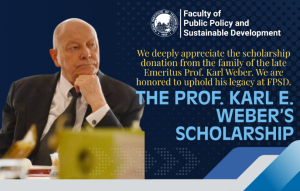
Examination Committee: Gopal B. Thapa (Chairperson); Karl E. Weber, Amador A. Remigio (Examination Committee Members)
Abstract: The increasing world population and rapid economic as well as technological advances have brought about rising competition for scarce land and other resources . In most cases, the environment has sufferred from the negative effects of development activities like pollution from industries. High population growth, rapid urban expansion and industrial development exert pressure on land on which these activities are undertaken. Conflict between land use and the environment have thus become one of the paramount issues today facing planners and decision makers. The necessity for environmentally-compatible land use is now widely recognized. Concern over a desirable land use pattern calls for the integration of environmental factors in land use planning. In this connection, land evaluation is necessary to assess land capability and suitability for particular land uses. The Pakchong District is a sample case of the rapid transformation undergoing in selected growth areas outside Bangkok as a consequence of Thailand’s recent policy of economic decentralization . Belonging to Nakhon Ratchasima province which is the gateway to the vast northeastern region, the Pakchong District lies along the route from Bangkok to Karat through the Friendship Highway. However, due to its locational advantage, the district has been experiencing fast economic development which puts heavy pressure on the land resources to meet the demands for urban, industry and tourism growth as well as agricultural use which is still the main economic activity. The unplanned urban growth has land use implications such as pollution, indiscriminate conversion of agricultural land to other uses, speculation leading to spiralling land price and rise of settlements beyond the range of infrastructural services available. This research study focuses on environmentally-compatible land use planning. The strategic elements considered were adoption of environmentally-sound land use policy, macrozoning and appropriate institutional framew
Scholarship Donor(s): Deutscher Akademischer Austauschdienst (DAAD)
Note: A Research Study submitted in partial fulfillment of the requirement for the degree of Master of Science, School of Engineering and Technology
Advisory: Full-text is available at https://library.ait.ac.th/ (accessible to local ip address only)