Author: Ganga Brahmana Mudiyanselage Mahinda Moragolle
AIT Library Call Number: AIT Thesis no. HS-82-14
Year: 1982
Academic Program: Human Settlement (HS)
Type: Thesis (M.Sc.) – Asian Institute of Technology, 1988
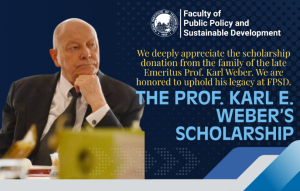
Examination Committee: Hiran D. Dias (Chairperson); Karl E. Weber, Suvit Yodmani, Guna N. Paudyal, (Examination Committee Members)
Abstract: Since t he dawn of the history irrigation and dry land settlement methods have been attempted in many countries to improve their rural economy . To achieve multiple goals of increasing agricultural production and generating income for the farmers , strategies a re required. The experience gained by many developing countries has exhibited achievement s despite obstacles and hardships associated with irrigated settlement s . Today t he livelihood of 800 to 1, 000 million people in developing countries depend directly on irrigated agriculture . Development of irrigated agriculture is a multi-disciplinary activity requiring co- ordinated and integrated efforts of agencies involved and the beneficiar ies. Farmer participation in irrigation management ha s been considered as i mportant i n those schemes in many countries. Paddy cultivation under irrigation and dry l and irrigated settlement development in Sri Lanka is over two thousand years old . Today out of 759 , 000 ha in the domestic agricultural sector about 500 , 000 are irrigated under both minor and major irrigation schemes while paddy cultivation provides a livelihood for about 7 mi l lion people and plays a key role in the national economy . During the past half of the century large amount of public funds have been invested in irrigation settlements development . Various problems have prevented adequate benefits been gained from t his investment. Considering these problems the need of improved farmer participation in and responsibility for water management has been emphasized. Recently the programme o f Integrated Management of Major Irrigation Settlement Schemes (INMAS) has been introduced in 35 major irrigation settlement schemes to achieve higher agricultural productivity and income for the farmers through increased farmer participation , co – ordinated and integrated management in irrigation water management and agricultural activities. This study is an evaluation of INMAS and its’ impact on agricultural development in Parakr
Scholarship Donor(s): Canadian International Development Agency
Note: A Thesis Submitted in Partial Fulfilment of the Requirements for t he Award of the Degree of Master of Science
Advisory: Full-text is available at https://library.ait.ac.th/ (accessible to local ip address only)