
Asian Institute of Technology
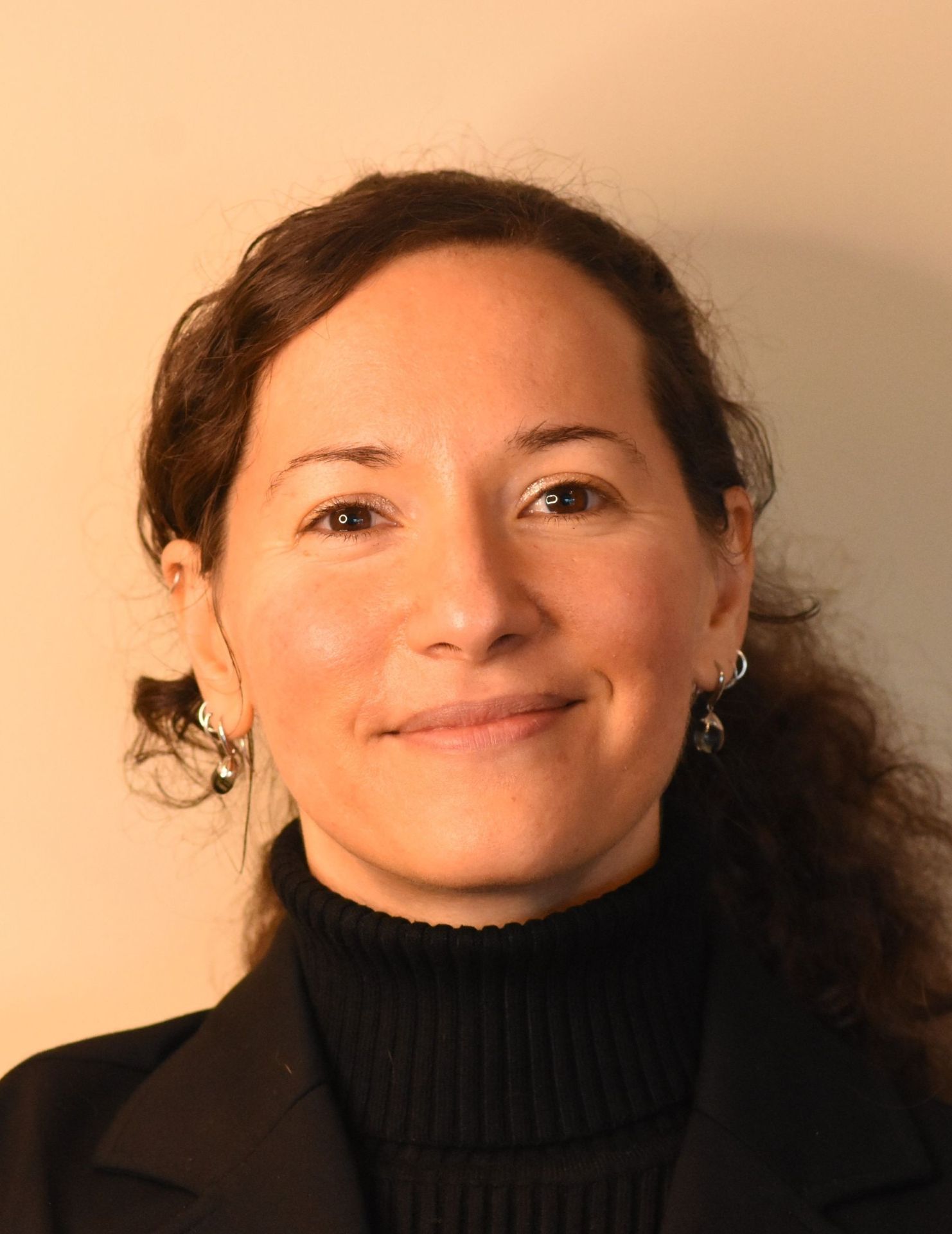
Ms. Tanja Pacifico
Chief of Mission
International Organization for Migration (IOM)
Country Office with Coordinating Functions (COCF)
for Thailand and Lao People's Democratic Republic
Ms. Tanja Pacifico is the Chief of Mission of the International Organization for Migration (IOM) Country Office with Coordinating Functions (COCF) for Thailand and the Lao People’s Democratic Republic.
She joined IOM in 2009 and has since covered several thematic areas, including Assisted Voluntary Return and Reintegration, Immigration and Border Management, Labour Migration, Migration and Development, Migration and Environment, Public Information, Civil-Military Coordination and Migration Governance.
Previously, Ms. Pacifico worked at IOM in Djibouti and Uruguay as Chief of Mission, as Chief of Mission a.i. in Niger and Paraguay, and at IOM in Egypt as Deputy Chief of Mission and Head of Policy, Governance and Liaison Unit. She has also held positions at IOM in the Netherlands, where she was Head of the Training, Resettlement and Integration of Migrants Unit, covering various national and regional initiatives.
Ms. Pacifico is an Italian national with an academic background in advanced management, communication and psychology. A graduate of the Università degli Studi di Torino, before joining IOM, Ms. Pacifico worked on migration in Belgium, the Netherlands and Spain.
MODERATOR
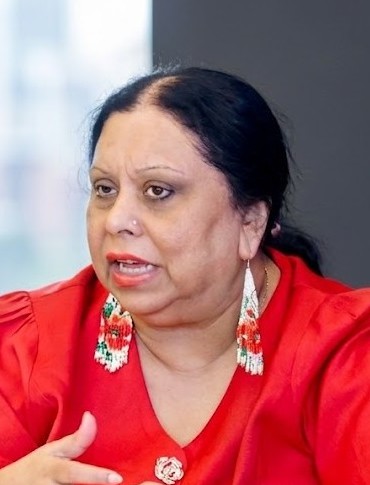
Prof. Paula Banerjee
Chair, Cender on Gender and Forced Displacement (CGFD)
Faculty of Public Policy and Sustainable Development (FPSD)
Asian Institute of Technology, Thailand
Prof. Paula Banerjee is an acclaimed scholar renowned for her work on forced migration, gender studies, borderlands, and peace politics in South Asia. She currently serves as the IDRC Endowed Research Chair on Gender and Forced Displacement and founding Director of the Center on Gender and Forced Displacement at the Asian Institute of Technology (AIT) in Thailand, alongside her role as a Professor in the Department of South and Southeast Asian Studies at the University of Calcutta. She earned her M.A. and Ph.D. from the University of Cincinnati and completed her post-doctoral research in Paris.
Examining international relations through a postcolonial feminist lens, Prof. Banerjee's research centers on the gendered dimensions of forced displacement, human trafficking, and statelessness across South Asia. She has extensively studied conflict governance, minority rights, and the lived experiences of women in borderland regions—particularly in Northeast India and along the Indo-Bangladesh and Sino-Indian borders. Beyond mapping the vulnerabilities of displaced populations, her research highlights women's active agency in peacebuilding, conflict resolution, and grassroots political resistance.
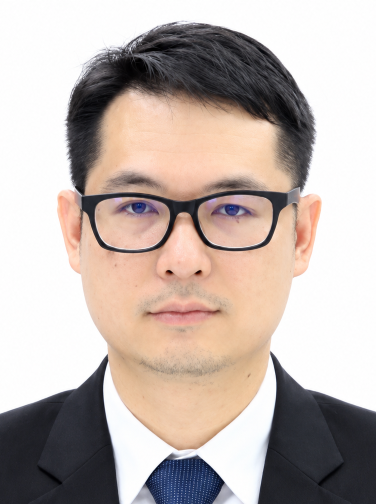
Mr. Zcongklod Khawjang
Foreign Affairs Division
Ministry of Interior, THAILAND
Mr. Zcongklod Khawjang is Director of the Displaced Persons and Irregular Migration Policy Coordination Unit, Foreign Affairs Division, Ministry of Interior, Thailand. His work focuses on migration governance, forced displacement, refugee protection, and the promotion of sustainable self-reliance for displaced populations, particularly through Thailand’s Right-to-Work initiative. He holds a Master of Arts in Migration Studies from the University of Sussex, United Kingdom.

Dr. Sirada Khemanitthathai
Faculty of Political Science and Public Administration
Chiang Mai University, THAILAND
Dr. Sirada is a lecturer at School of International Affairs, Faculty of Political Science and Public Administration, Chiang Mai University. She also currently serves as a Research Chair on Forced Displacement in Southeast Asia at the Regional Center for Social Science and Sustainable Development (RCSD). Her ongoing research projects are related to border security at Myanmar-Thailand border after the 2021 coup and internationalization of Myanmar’s political crisis, especially migration from Myanmar.

Ms. Naiyana Thanawattho
Executive Director
Asylum Access Thailand Foundation (AAT), THAILAND
Naiyana Thanawattho has led Asylum Access Thailand since 2019. AAT provides legal aid, case management and strategic litigation for urban refugees in Bangkok, and runs community paralegal programs in Bangkok and Mae Sot. Thailand has no refugee law and is not a party to the 1951 Refugee Convention, so much of her work is about making protection real in practice: working with refugee-led networks on alternatives to detention and on recognition for refugees, especially recent arrivals from Myanmar.
In 2021–22, Naiyana represented civil society on the Thai Government’s Sub-Committee on the National Screening Mechanism (NSM), bringing civil society and refugee views into its guidelines and criteria. She is a founding member of the Myanmar Response Network (MRN) and coordinated the Coalition for the Rights of Refugees and Stateless Persons (CRSP) from 2020 to 2022. In 2026, AAT, the Refugee-Led Network and Rights Beyond Border made a joint submission on Thailand to the UN Universal Periodic Review, covering the NSM, immigration detention, forced returns and the protection of refugee children.
Most recently, she led AAT’s 2025–26 project in Mae Sot, supported by the Government of Canada through the Canada Fund for Local Initiatives. The project trained a network of community paralegals that includes women and gender-diverse Burmese refugees, and set up a legal clinic by and for LGBTIQ+ community members. It also produced a community-developed protocol on sexual and gender-based violence and a study on the risks refugees face if returned to Myanmar.
Naiyana has more than ten years of experience in child protection with UNICEF, UNHCR and Save the Children, and holds a master’s degree in Women’s Studies from Thammasat University. This background shapes her focus on women, children and LGBTIQ+ refugees, who face the greatest risks in displacement.