
Asian Institute of Technology
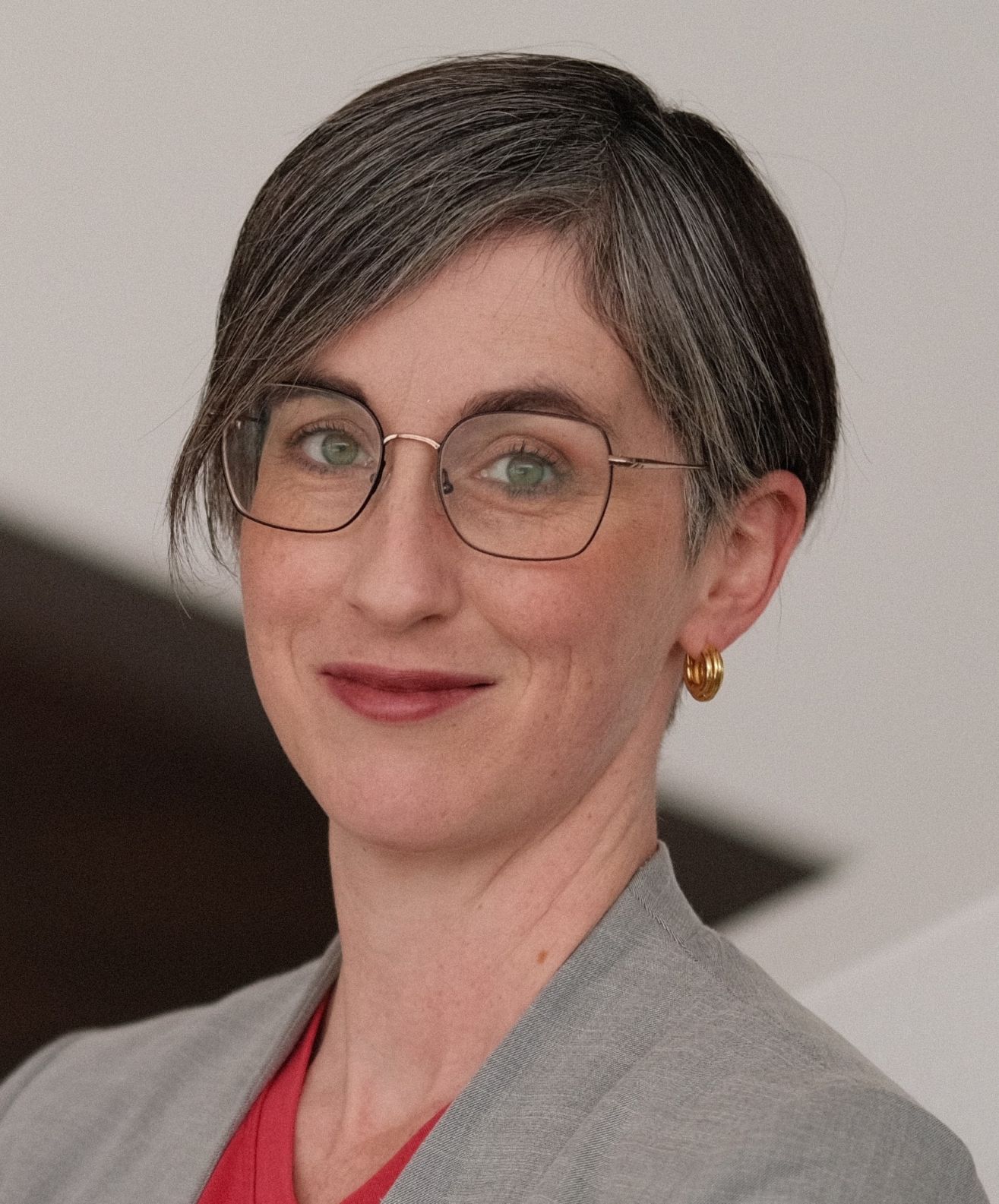
Dr. Stéphanie Martel
Hardy Chair in Political Science
Queen's University Kingston
Canada
Stéphanie Martel is Associate Professor in the Department of Political Studies and the Hardy Chair in Political Science (2025-2028) at Queen's University. Her research is on multilateral diplomacy and regional security governance, with a focus on Southeast Asia and the Indo-Pacific. Dr. Martel’s work has been published in peer-reviewed journals such as International Studies Quarterly, International Affairs, Global Studies Quarterly, European Journal of International Relations, International Studies Perspectives, PS: Political Science & Politics, and The Pacific Review, among others. She is the author of Enacting the Security Community: ASEAN’s Never-Ending Story (2022, Stanford University Press). Dr. Martel represents Canada in various expert diplomacy mechanisms and policy dialogues on issues of Indo-Pacific security, including the ASEAN Regional Forum's Eminent and Expert Persons Group and the Council for Security Cooperation in the Asia-Pacific. She is a member of the Research Network on Women, Peace and Security, a Distinguished Fellow at the Asia-Pacific Foundation of Canada, and a former Director of the Centre for International and Defence Policy (CIDP).

MODERATOR
Dr. Duanghathai Buranajaroenkij
Gender and Development Studies (GDS)
Faculty of Public Policy and Sustainable Development (FPSD)
Asian Institute of Technology, Thailand
Dr. Duanghathai is with the Gender and Development Studies (GDS) program at the Asian Institute of Technology (AIT) in Thailand. She earned her Ph.D. in Gender and Development Studies from AIT in 2016 and holds an M.A. in Conflict Analysis and Management from Royal Roads University in Canada. Prior to her position at AIT, she gained extensive experience working with civil society initiatives like the Spirit in Education Movement (SEM) and served for many years as a researcher at Mahidol University’s Research Center for Peacebuilding, which later became part of the Institute of Human Rights and Peace Studies.
Her expertise centers on conflict transformation, human rights, gender and development, and dialogue facilitation. Her field research focuses on gender perspectives in peacebuilding, specifically in Thailand's southern border provinces and neighboring regional contexts like Myanmar. In addition to academic research, she has led grassroots peacebuilding projects—including the "Weaving Peace Together" project—and facilitated community and peace-focused dialogues to help mitigate local conflicts.
Dr. Duanghathai also works directly at the intersection of research and public policy. In 2023, she was appointed by Thailand’s Ministry of Social Development and Human Security to serve as a committee member for drafting the National Action Plan on Women, Peace, and Security. She has published widely on subjects including women’s political participation, insider mediation, and the implementation of the Women, Peace, and Security (WPS) agenda in Southeast Asia.

Dr. Helen Stenger
Centre of Excellence for the Elimination of Violence Against Women (CEVAW)
Monash University, Australia
She holds a Ph.D. in Politics and International Relations from Monash University, a Master of Arts in International Relations from Leiden University and a Master of Science in Clinical Neuropsychology from the University of Groningen. Her research interest lies at the intersection of extremism, including Islamist, far-right and Buddhist, and gender-based violence. Helen Stenger’s work has been published in the European Journal of International Security, Critical Studies on Terrorism, and European Journal of Politics and Gender. Her forthcoming book is titled Returning Home: An Intersectional Analysis of the Repatriation, Rehabilitation and Reintegration of Foreign Fighters.

Ms. Hnin Shwe Zin
Gender and Equality Network
Myanmar
Hnin Shwe Zin Hlaing is a dedicated advocate for gender equality and women’s rights, bringing over 12 years of experience in advancing gender justice, social inclusion, and gender-based violence (GBV) prevention. Since 2021, her work has focused extensively on the Women, Peace, and Security (WPS) agenda within Burma/Myanmar’s complex sociopolitical landscape. Currently, she serves as the Director at the Coordination Unit of the Gender Equality Network (GEN) and sits on the Steering Committee of the Myanmar Women, Peace, and Security (M-WPS) alliance. Through these leadership and coalition roles, she drives strategic coordination, collective policy advocacy, and grassroots engagement to ensure women’s meaningful participation in peacebuilding and decision-making processes. Her rights-based approach is underpinned by a deep understanding of intersectional gender issues and structural inequalities. She holds a master’s degree in Gender and Development Studies from the Asian Institute of Technology (AIT), Thailand.

Dr. Amporn Marddent
Center for Contemporary Social and Cultural Studies (CCSCS)
Thammasat University
Bangkok, Thailand
Dr. Amporn Marddent is a lecturer in the Department of Anthropology, Director of the Center for Contemporary Social and Cultural Studies (CCSCS), and Head of the Research Cluster on Women, Precarity, and Security Transformation at the Faculty of Sociology and Anthropology, Thammasat University, Bangkok. Dr. Amporn is also the founding director of the Center of Excellence on Women and Social Security at Walailak University in Southern Thailand, which she established in 2018 and led until 2022.
Since 2020, she has served as one of Thailand’s representatives to the ASEAN Women for Peace Registry (AWPR), appointed by the Ministry of Foreign Affairs and the ASEAN Governing Council, where she contributes expertise on gender and peacebuilding. She is also a Partner Investigator with the ARC Centre of Excellence for the Elimination of Violence Against Women (CEVAW). Her research focuses on gender, religion, and ethno-cultural politics in Muslim communities; women, displacement, and precarity; sexual and gender-based violence; and the Women, Peace, and Security (WPS) agenda in Southeast Asia.
Dr. Amporn received her PhD in Anthropology from Goethe University Frankfurt, Germany, in 2017, with a dissertation titled Gender Piety of Muslim Women in Thailand. Bridging academic research and community engagement, her work draws on cross-disciplinary approaches spanning anthropology, gender studies, comparative religion, and peace and conflict studies. She engages with women, youth, and community actors to explore gender, power, equality, and justice, particularly the enduring impacts of conflict on intercommunal relations between Muslims and non-Muslims in Southern Thailand.
Her research draws on ethnographic fieldwork and examines the intersections of gender, religion, identity, displacement, and social and political transformation. Her publications include Sexual Culture among Young Migrant Muslims in Bangkok (2007), Gender Piety of Muslim Women in Thailand (2013), Women, Peace and Security Agenda: Recommendations for the Development of a National Action Plan (2022), “Thai Muslim Women’s Negotiation with Sharia through Food and Clothing” (2024), “Religious Minorities in Thailand” (2025), and “Contested Meanings of the Veil’s Resurgence among Thai Muslim Youth” (2025). Her more recent work extends these ethnographic and analytical inquiries to displacement, gendered precarity, and urban politics, as reflected in “Live in and out of the Shadow: The Narratives of Rohingya in Bangkok” (2026), “Extreme Violence and Vulnerability for Women and Girls in Displacement Contexts” (2026), and “Nakhon Si Thammarat: The Mobilisation of Village Health Volunteers” (2026).